EDI for Cloud v2 connector in Jitterbit Studio
Summary
The EDI for Cloud v2 connector establishes access to Jitterbit EDI.
The EDI for Cloud v2 connector provides an interface for creating an EDI for Cloud v2 connection, the foundation used for generating instances of EDI for Cloud v2 activities. These activities, once configured, interact with Jitterbit EDI through the connection.
The EDI for Cloud v2 connector is accessed from the design component palette's Project endpoints and connectors tab (see Design component palette).
Important
This connector requires a subscription to Jitterbit EDI. Contact your Customer Success Manager (CSM) for more information.
Connector overview
This connector is used to first configure an EDI for Cloud v2 connection. Activity types associated with that connection are then used to create instances of activities that are intended to be used as sources (to provide data in an operation) or targets (to consume data in an operation).
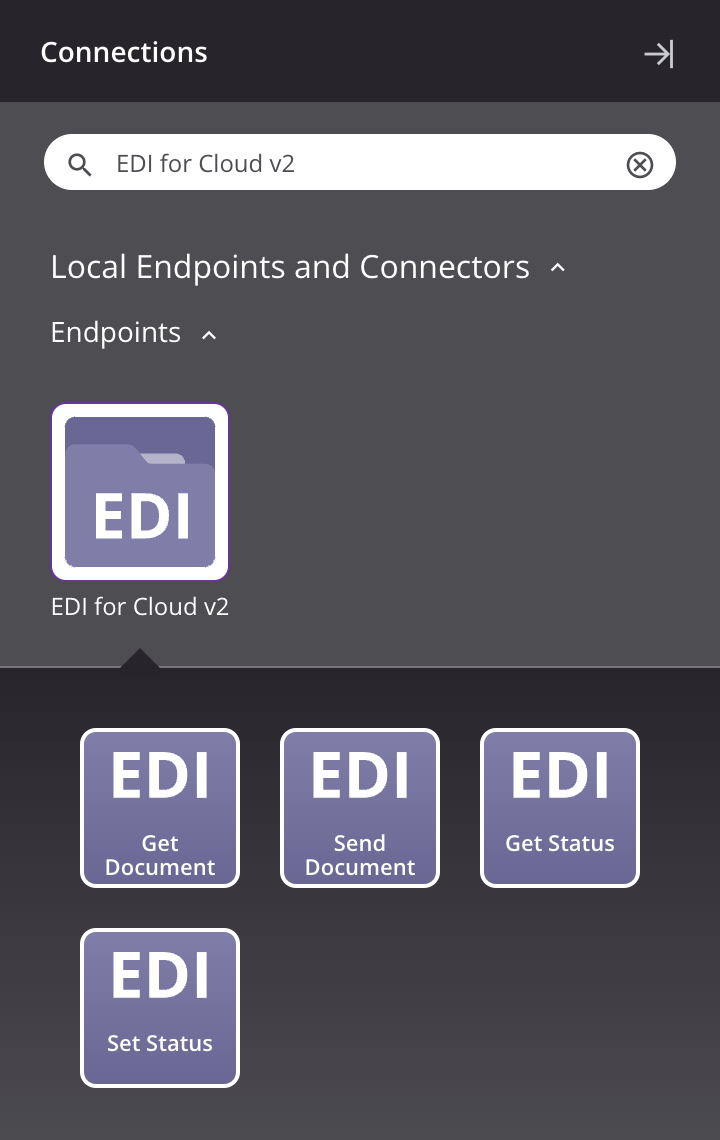
Together, a specific EDI for Cloud v2 connection and its activities are referred to as an EDI for Cloud v2 endpoint:
-
Transaction Raw Data: Retrieves the raw EDI data from a specified document in a Jitterbit EDI transaction and is intended to be used as a source in an operation.
-
Get Document: Retrieves all documents (from a specified partner) from Jitterbit EDI and is intended to be used as a source in an operation.
-
Send Document: Sends documents to Jitterbit EDI and is intended to be used as a target in an operation.
-
Get Status: Retrieves the status of documents from Jitterbit EDI and is intended to be used as a source in an operation.
-
Set Status: Updates the status of a document in Jitterbit EDI and is intended to be used as a target in an operation.
-
List Transactions: Retrieves transactions from Jitterbit EDI based on specified filter criteria. This activity is intended to be used as a source in operations.
-
Notifications: Retrieves system messages from Jitterbit EDI based on specified filter criteria. This activity is intended to be used as a source in an operation.
Endpoints created with this connector are excluded from endpoint usage reporting and from your license count.
Prerequisites and supported API versions
This connector can be used with cloud agents and private agents.
Agents automatically download the latest version of this connector when required. On private agents, you can suspend these updates with the Disable Auto Connector Update organization policy.
The EDI for Cloud v2 connector requires access to Jitterbit EDI, which is currently released only to selected organizations. To gain access prior to general availability, contact your account executive.
The EDI for Cloud v2 connector uses a custom Jitterbit API.
Troubleshooting
If you experience issues with the EDI for Cloud v2 connector, these troubleshooting steps are recommended:
-
Click the Test button in the connection configuration to ensure the connection is successful and to ensure the latest version of the connector is downloaded to the agent (unless using the Disable Auto Connector Update organization policy).
-
Check the operation logs for any information written during execution of the operation.
-
Enable operation debug logging (for cloud agents or for private agents) to generate additional log files and data.
-
If using private agents, you can enable connector verbose logging for this connector by adding this logger configuration entry to your private agent's
logback.xmlfile:<logger name="org.jitterbit.connector.ediv2" level="DEBUG"/>For more information on connector verbose logging, see Verbose logging for connectors using Jitterbit private agents.
-
If using private agents, you can check the agent logs for more information.
-
For additional troubleshooting considerations, see Operation troubleshooting.